What you need
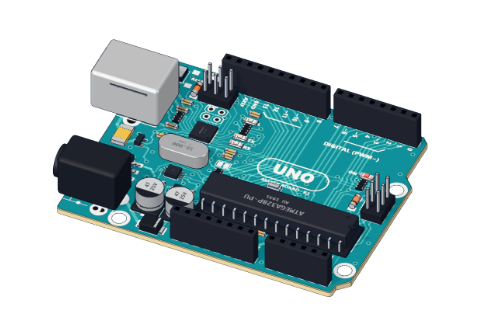 Arduino UNO R3 (or a compatible board)
- USB cable (A to B)
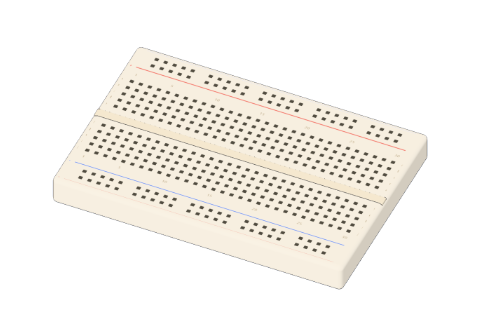 Half-size breadboard
- Jumper wires (male–male)
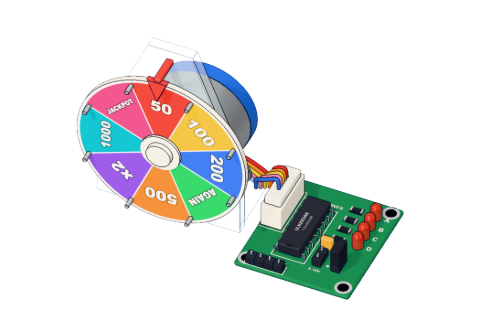 28BYJ-48 stepper + ULN2003 driver
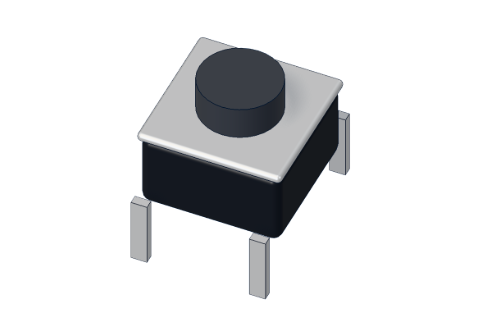 Push button (6 mm)
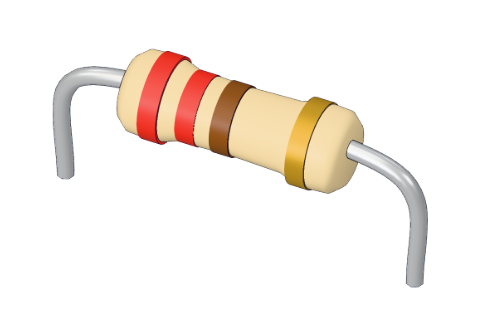 10 kΩ resistor
Don't have the parts? Build it in 3D first.
What it is
The 28BYJ-48 is a small 5 V stepper motor with a gearbox, almost always sold with a ULN2003 driver board. Instead of spinning freely, it turns in exact steps: 2048 steps make one full turn of its shaft. Tell it "512 steps" and it turns exactly a quarter turn — every time, with no sensor needed.
Perfect for a prize wheel, a clock hand or a pet feeder. See it in 3D.
How it works
Inside the motor are four coils (called A, B, C and D) around a magnet. Switch on coils in the right order and the magnet is pulled from one to the next, a little click at a time. Switch them in the opposite order and it turns backwards. Stop switching and it holds still.
Each click inside the motor is tiny, and a gearbox of about 1 : 64 makes it even finer. The result: 2048 full steps per turn, or 360° ÷ 2048 ≈ 0.18° per step.
The full-step sequence
The Arduino Stepper library switches two coils at a time, moving round like this:
| Step | Coils on | Driver LEDs lit |
|---|---|---|
| 0 | A + B | A, B |
| 1 | B + C | B, C |
| 2 | C + D | C, D |
| 3 | D + A | D, A |
Then back to step 0 — four steps, over and over. Our 3D lab watches the IN pins and moves the shaft exactly the same way, and the driver board's LEDs A–D light to show which coils are on.
Why a driver board?
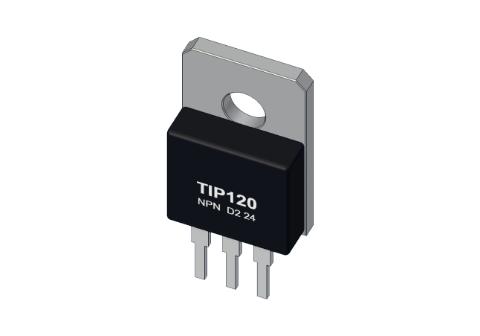
Each coil wants far more current than an Arduino pin can give. The ULN2003 chip on the driver board holds seven Darlington transistors — little cousins of the TIP120 — plus protection diodes. The Arduino's pins only tell it which coils to switch; the power comes from the board's + and − pins.
Pins
| Driver pin | Goes to | What it does |
|---|---|---|
| IN1 | Pin 8 | Switches coil A |
| IN2 | Pin 9 | Switches coil B |
| IN3 | Pin 10 | Switches coil C |
| IN4 | Pin 11 | Switches coil D |
| + | 5V | Power for the coils |
| − | GND | Ground |
The motor itself plugs into the white five-pin socket on the driver board — it only fits one way.
How to wire it to an Arduino
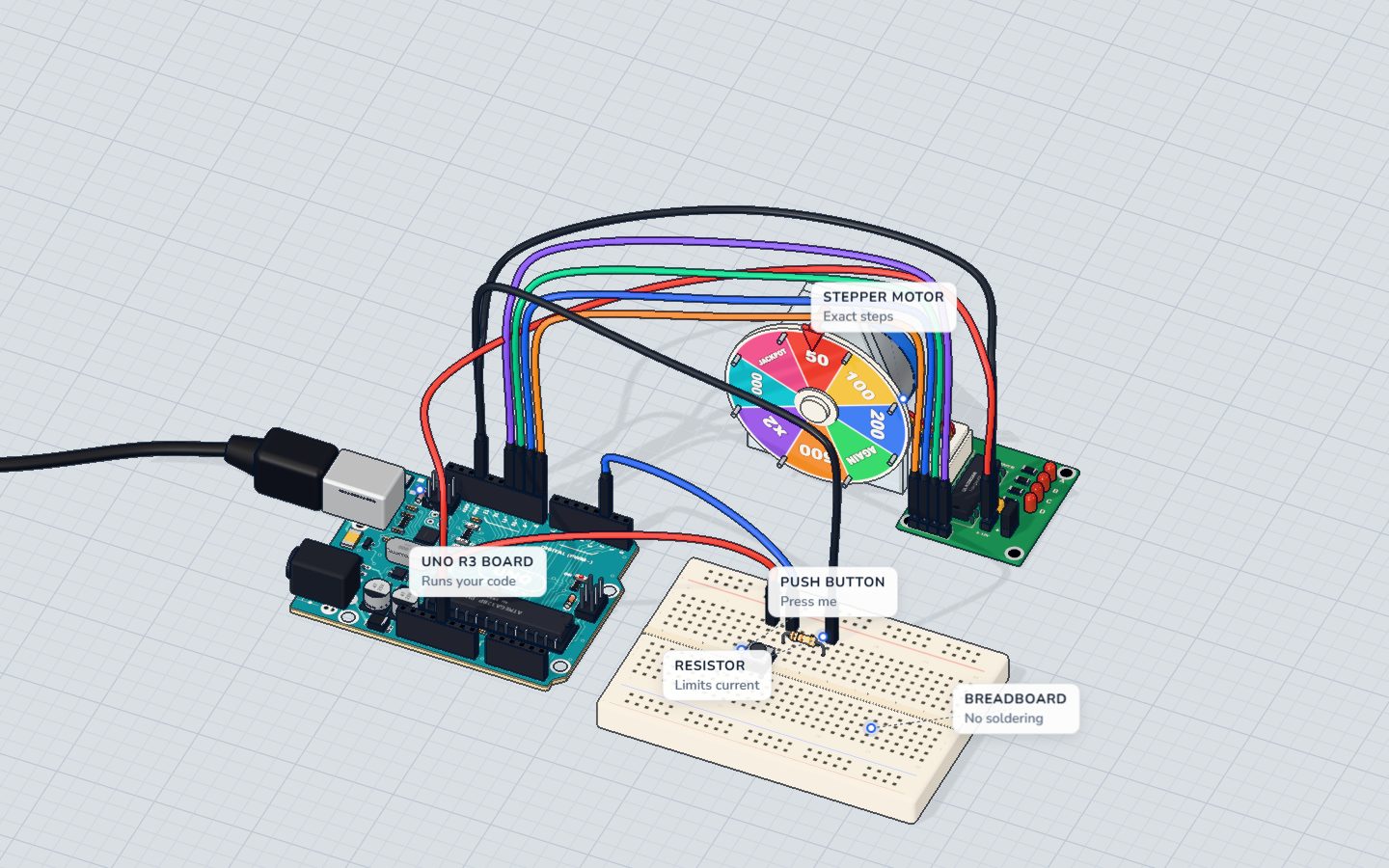
- IN1 → 8, IN2 → 9, IN3 → 10, IN4 → 11.
- Driver + → 5V, driver − → GND.
- For the prize-wheel project, a push button on the breadboard: one side to 5V, the other to pin 2, with a 10 kΩ resistor from pin 2's side to GND (a pull-down, so the pin reads LOW until pressed).
Example code
#include <Stepper.h>
const int TURN = 2048;          // steps in one full turn
const int SEGMENTS = 8;
const int BUTTON = 2;
const char* PRIZES[] = { "50", "100", "200", "AGAIN", "500", "x2", "1000", "JACKPOT" };
Stepper wheel(TURN, 8, 10, 9, 11); // IN1, IN3, IN2, IN4
int at = 0;                     // the segment under the pointer

void setup() {
  pinMode(BUTTON, INPUT);
  wheel.setSpeed(12);           // turns a minute
  randomSeed(analogRead(A0));
  Serial.begin(9600);
  Serial.println("Press the button!");
}

void loop() {
  if (digitalRead(BUTTON) == HIGH) {
    int prize = random(SEGMENTS);
    int ahead = (prize - at + SEGMENTS) % SEGMENTS;
    wheel.step(TURN + ahead * (TURN / SEGMENTS));
    at = prize;
    Serial.print("Landed on ");
    Serial.println(PRIZES[at]);
  }
}
Stepper wheel(TURN, 8, 10, 9, 11);— the odd order IN1, IN3, IN2, IN4 is not a typo. It makes the library's pattern switch the coils A+B, B+C, C+D, D+A, as in the table above. With 8, 9, 10, 11 the motor only buzzes.wheel.setSpeed(12);— 12 turns a minute, so one turn takes 5 seconds.TURN / SEGMENTS— 2048 ÷ 8 = 256 steps per prize segment.wheel.step(...)— one full turn for the show, plus however many segments it takes to reach the prize. It stops exactly there.
Common mistakes
- It buzzes but does not turn. The pins are in the wrong order in the code — use 8, 10, 9, 11 for IN1–IN4 on 8–11.
- It skips or stalls. The speed is too high. The 28BYJ-48 is slow; stay around 10–15 turns a minute.
- The rest of the program freezes.
step()does not return until all the steps are done. Move in small pieces if you need to do other things meanwhile.
Check yourself
How many steps make one full turn of a 28BYJ-48 here?
The Stepper library counts 2048 full steps for one turn of the output shaft.
Why is there a ULN2003 driver board?
Its Darlington transistors switch the coils; the pins only signal which ones.
How many steps is a quarter turn?
2048 ÷ 4 = 512.
Questions people ask
What is the difference between a stepper and a servo?
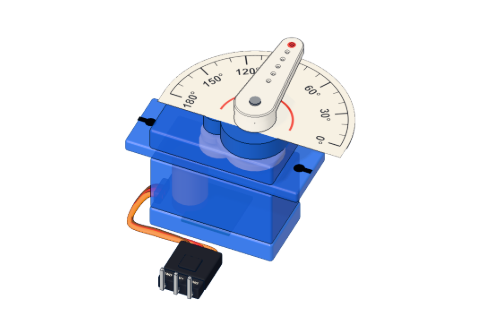
A servo goes to an angle from 0° to 180° and holds it with a sensor inside. A stepper can turn forever in either direction, counting exact steps, but has no sensor — it trusts that no step was missed.
Is it 2048 or 4096 steps per revolution?
Both are right. The Stepper library uses full steps (2048 a turn). Switching one and two coils in turn makes half steps — 4096 a turn — which is smoother but needs a different library.
Can I power the 28BYJ-48 from the Arduino?
One motor on USB is fine for learning. For several motors, give the driver its own 5 V supply and join its GND to the Arduino's GND.
Where it is used
It spins the prize wheel in spin the wheel. For a motor that just needs a quick angle, see how a servo works.
Build it yourself in 3DFree, in your browser — no board, no wires, nothing to buy.Open the 3D lab →Your progress stays on this device — no account, nothing sent anywhere.
Last updated 2026-10-29